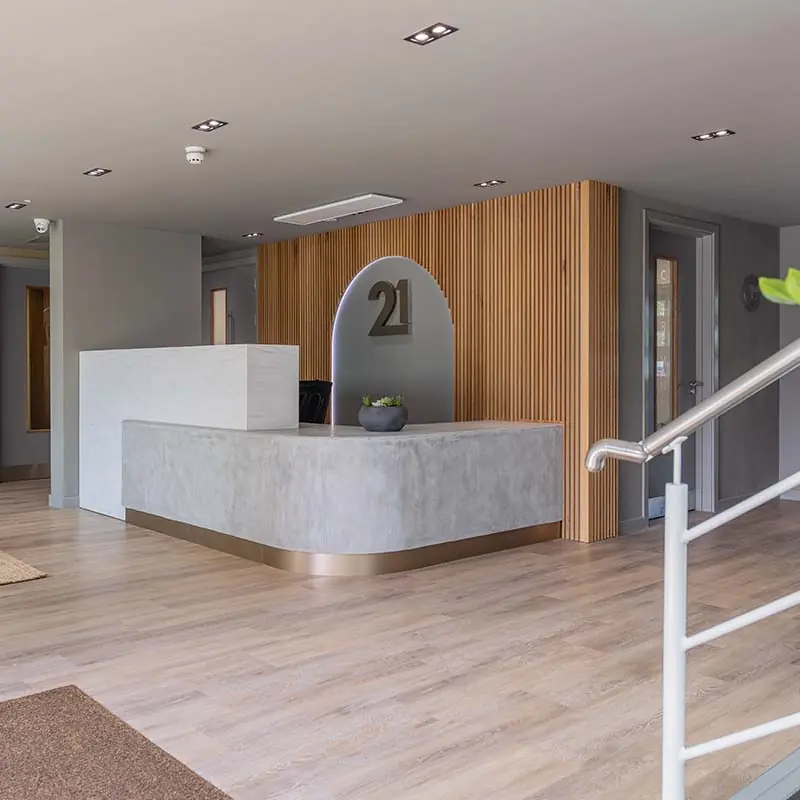
A shared building, often called a multi-let, is one where several businesses rent space under one roof. Think of an office block with a different company on each floor, or a row of units on an industrial estate that share a yard.
Shared buildings work well for tenants, but they create a question that single-occupier buildings don't: who looks after what? Here's a plain-English guide for landlords, owners and managing agents.
Who Looks After What
In most shared buildings, the work splits into two parts:
- The tenant's own space. Each business usually looks after the inside of the space it rents, although the lease decides the details.
- The common parts. These are the areas everyone shares, like the entrance, reception, stairs, corridors, lifts, shared toilets, car parks and the roof. These usually fall to the landlord.
The lease is the rulebook. It sets out who repairs what, who pays, and how costs are shared. If you're not sure, that's the first place to look.
The Checks The Common Parts Need
Whoever controls the common parts is usually the responsible person, the one with the legal duty to keep those areas safe. That typically covers:
- Fire safety: an up-to-date fire risk assessment for the shared areas, plus a working fire alarm and clear escape routes.
- Emergency lighting: the lights that come on in a power cut to guide people out of stairs and corridors, tested monthly and yearly.
- Electrics: a periodic safety inspection of the building's fixed wiring, known as an EICR.
- Water: a legionella risk assessment and regular checks on shared water systems.
- Lifts: a thorough examination by a specialist under LOLER, usually every six months for passenger lifts.
- Asbestos: in older non-domestic buildings, a duty to find out whether asbestos is present and manage it safely.
This is general guidance. Every building is different, and the exact checks depend on its systems, its lease and the advice of the qualified people who service it.
Why It Matters
- Safety: tenants, visitors and contractors all use the shared areas every day.
- The law: missed checks can lead to enforcement action, and the duty stays with whoever is responsible, even if the work is handed to someone else.
- Insurance: insurers may ask for certificates after a claim.
- Value: a well-kept building lets faster, keeps tenants longer and is easier to sell.
Keeping Tenants Happy
Most tenant complaints aren't about the fault itself. They're about not knowing what's happening. A few simple habits help:
- Make reporting easy. One clear way to report a problem, not a string of emails and phone calls.
- Acknowledge quickly. Let people know the issue has been seen and who's dealing with it.
- Keep them updated. A short update when the engineer is booked and when the job is done goes a long way.
Making The Service Charge Easy To Explain
The service charge is how landlords recover the cost of running the shared areas from tenants. Tenants are more likely to accept it when every cost is clear. Keep a record of each job, what it cost and why it was needed, with photos where you can.
How One Space Can Help
We come from property, so we understand landlords, agents and tenants. With SmartFix, every common parts check goes into one plan, gets booked in before it's due, and the certificates are kept in One View, ready for owners, agents and insurers. Tenants can report issues and follow the updates themselves, so you're not stuck in the middle.
Find out more about how we look after multi-let buildings, or talk to us about yours.
 Guides
 Guides
 Technology