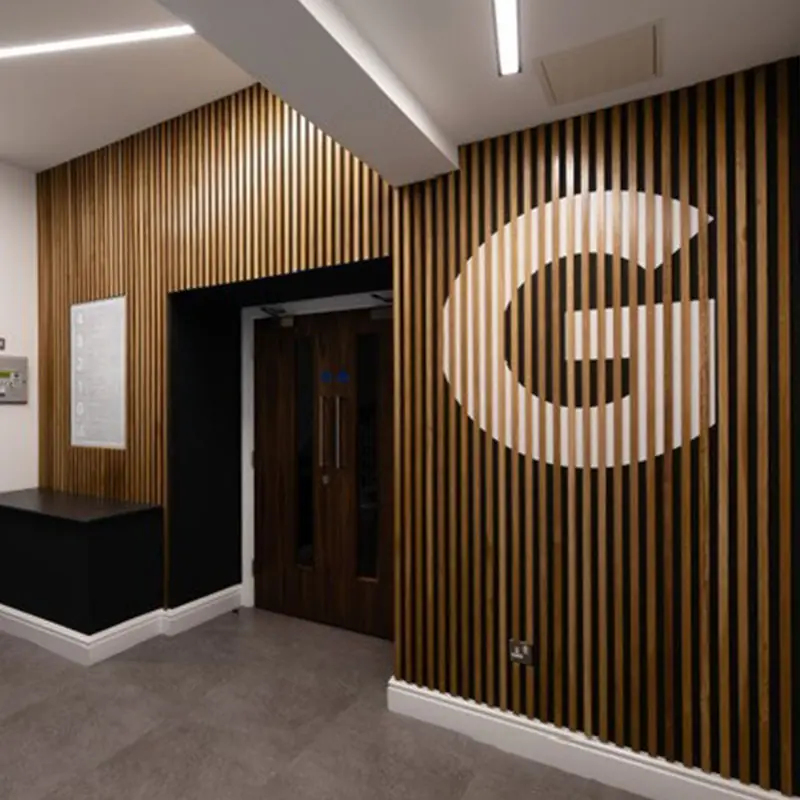
Most commercial buildings have fire doors, and people walk through them every day without a second thought. A fire door that's wedged open, damaged or won't close properly gives very little protection when it's needed.
Here's a plain-English guide to what fire doors do, what to check and why it matters.
What A Fire Door Does
A fire door is built to hold back fire and smoke for a set time. That buys people time to get out and keeps escape routes, such as stairs and corridors, usable for longer. It also helps stop a fire spreading from one part of a building to another.
You'll often see a rating like FD30 or FD60. The number is how many minutes the door is designed to resist fire. An S on the end, as in FD30S, means it also has smoke seals.
A fire door works as a whole set: the door, frame, hinges, closer, seals and glass. Swap one part for the wrong thing and it can stop protecting people.
Why It Matters
- Safety: smoke is often the biggest danger in a fire. A closed fire door can keep a stairway clear long enough for everyone to get out.
- The law: under the Regulatory Reform (Fire Safety) Order 2005, the responsible person must keep fire safety measures, including fire doors, maintained and in good working order.
- Insurance: insurers expect fire protection to be looked after, and may ask for records if there's ever a claim.
- Leases: in shared buildings, the lease usually decides who looks after the doors in the common areas and who looks after the ones inside each tenant's space.
What To Look For
A quick look can catch most problems. Here's what to check:
- It closes on its own. Open the door fully and let go. It should close completely and click into the latch without a push.
- It isn't propped open. Wedges, fire extinguishers and bins holding doors open are one of the most common problems.
- The gaps are small and even. The gap around the top and sides is typically about 3mm. Big gaps let smoke and flames through.
- The seals are in place. Look for the strips around the edge of the door or frame. They shouldn't be painted over, torn or missing.
- The glass is intact. Any glass panel should be undamaged and fitted firmly.
- The hardware is sound. Hinges should be secure with no missing screws, and the closer at the top of the door shouldn't be leaking oil.
- The sign is there. Most fire doors should show a Fire Door Keep Shut sign.
What If A Door Needs To Stay Open?
Propping a busy door open is tempting. The safe answer is a hold-open device linked to the fire alarm. It keeps the door open during the day and lets it close automatically when the alarm sounds. A wedge never does that.
How Often Should Fire Doors Be Checked?
For most commercial buildings, there's no single fixed timetable. It depends on the building and how busy the doors are. A door on a busy corridor gets knocked far more than one to a plant room, so it needs checking more often.
Your fire risk assessment should cover fire doors. A common approach is regular quick checks, plus a more detailed inspection by a competent person. Industry guidance, such as BS 8214, covers how fire doors should be fitted and maintained. Repairs should always use the right parts, fitted by someone who knows what they're doing.
This is general guidance. Every building is different, and the building's own fire risk assessment and the competent people who look after it decide exactly what applies.
How One Space Can Help
With SmartFix, fire door checks go into one plan for your building alongside your other checks, get booked in before they're due, and the records are kept in One View. If a check finds a problem, we can put it right.
Spotted a door that won't close? Report a repair, or talk to us about keeping your fire doors in order.
 Guides
 Guides
 Guides